

Norcal Bluefin Tuna Fishing 101: Getting The Bite


Updated 2026 with some new information since the fishing has changed over the past few years. The fishing has been great and I’ve had some time to fine tune things, check the Fishing Reports Page for more info on what’s happening on the water. As the bluefin seem to come and go all year around now depending on the weather.
This Is part 1 of 2 of the NorCal Bluefin Tutorials.
For Part 2, select Norcal Bluefin Tuna Fishing 102: From the Bite to the Bag
With the Bluefin showing up again in big numbers for the 2nd year in a row in Norcal, there are endless questions on every forum and social media page. I figured I would take the time to write up a little bluefin tutorial while its windy, as many people who are booking tuna trips are private boaters wanting to learn more. I still recommend going with me (or at least someone who has all the gear and experience) for a day, as I can show you all of this information in real time, show you how to read the birds, and show you what happens when it all works together. Also note there’s many ways of getting one of these things into the boat, but throughout the years I have noticed certain patterns that work and fine tuned a lot of them last year when we had a incredible bite off Bodega Bay for several months. My style isn’t the only way to get fish. When these things get hungry they will bite just about anything, but when they get picky, coaxing one out of one thousand fish to bite requires a lot of fine adjustments, and landing that one is even harder. This write is up pretty lengthy, and it only covers how to get your gear prepared and the basics of tuna fishing. Tuna is an exciting fishery as there is always a “new” thing that seems to improve the sport boat landings, and there’s a lot of cool inventions we have to play with.
Where and How I learned all of this
In 2016 we had some great albacore years off Fort Bragg, getting 40+ fish for 2 guys in an hour or less several days in a row. We wanted to hook into something better and the bigger bluefin were starting to make an appearance back in SoCal off San Clemente Island for the first time in decades, we charged south completely unprepared and spent 6 days nearly 100 miles from shore learning and struggling to skip yummy flyers on a kite and didn’t even see a fish the entire trip. We spent another dozen or so trips learning how to use the new cool things from kites, balloons, frozen flyers, immortal flyers (now California flyers), spreader bars, DTX minnows and now the madmacs has taken over, with maybe the new madscad next. It all has worked before and it all continue to work, you just need to know when and how to use the right tool, and for NorCal we are still learning, but luckily there seems to be patterns immerging similar to the SoCal guys have found.
General Information About Bluefin
Bluefin typically migrate North to south along the continental shelf from Baja to California, while we have always had bluefin in NorCal, the past few years have consistently improved on the quality and quantity compared the past few decades. The fish move north to feed and collect in our area, targeting the massive schools of anchovies that collect around the currents created by the topography of Cordell and the Farallon Islands. The most important rule of bluefin fishing to understand is that when the bluefin are actively feeding on anchovies and your seeing “foamers” , that your single lure has very slim chances of being bit in a school of thousands of anchovie, its possible but not easy. Its worth swinging your lure through them while carefully avoiding driving the boat over them. Some days you can really kill it in the foamers if they arnt boat shy but 90% of the time they wont bother with your plastic junk. Its very easy to obsess over one school of foamers and throw your entire tackle box at them on every rod you have and not get a single bite all day and a lot of guys struggle with that. When they are hunt and “breezing” or boiling next to the boat or your seeing marks on your sounder, your odds are extremely high of getting bit. That being said we have hooked a few fish throwing small colt snipers into foamers, you just need to cast very much in the the right spot exactly when the bait boils. Foamers are good to be around, but don’t obsess over them.
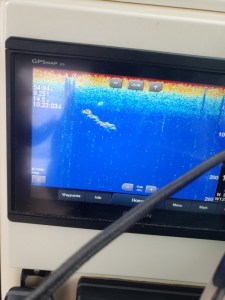


We get lots of foamer schools up here in Northern California that won’t touch poppers, jigs or trolling lures, while around 80% of all the NorCal bluefin I’ve landed have been near or in breazers. Often you will see fish breezing within a few hundred feet of the foamers, or between 2 separate foamer patches, those fish can often be your golden ticket to a sure bite if you can get a lure in front of them, as they have lost sight of the bait and looking for something to eat.
Here’s some video I recorded out of Bodega Bay of a decent size Bluefin foamer patch. You can see all of the crazyness of birds, whales, sea lions and tuna chasing bait. We spent all day fishing dozens of foamers spots like these for only one fish that day, there was so much bait in the area, that the fish seemed to be constantly foaming all day.
The next video shows what breazers with birds chasing them will look like. Notice how the fish arn’t feeding very crazy, but splashing along and you can see the birds following. There wont always be birds following the fish when they do this though. The video is a bit shaky, as I was zoomed in on a day with bigger swells, but you can see how the birds are casually following and they are somewhat moving in a direction, vs all going crazy in circles like a foamer. We hooked up about 60 seconds after I recorded this video, and had 4 bites that morning, all on breazers like this.
Being able to read if birds are following fish or bait takes hundreds of hours on the water and often a good set of gyroscopic binoculars, this is where I recommend booking a day with me and I can teach you had to read birds with gyros and you can decide if you want to spend the money on a set. If I’m not hooked up on a fish either my deckhand or I, are looking through the gryos for birds, and we are often looking for the next set of birds to chase even if we are actively circling a foamer patch. When your tuna fishing you should always have at least one person the the roof, or the highest safe position looking out for bird activity when your not seeing fish within bare eyesight of the boat. A few feet of height from the water can add many miles to your line of sight. One last note, if you see foamers and on your own boat, please keep your boat a pretty good distance away as you will spook the fish down, you wont get bit running through the foamers. You want to swing your lures through, but keep your motors a good distance away but doing a half circle around them. If you see another boat working on some foamers, please be cautious of them and give them plenty of space, good communication over the radio can go a long ways, and many new fisherman cause a lot of problems. My rule of thumb is that if i see 4 boats within bare eyesight, the area is over being fished and I need to find a new zone.
Up Vs Down
We’ve all fished for salmon or halibut and notice bite come and go in flurrys around the tidal swings. Tuna do the same thing, except when they aren’t on the bite they hang out down at 500′ to 3000′ , this is often called being down. You cant do much in this time but sit and wait for them to come up and start feeding again. If your in the area when the fish first come back up, your odds of getting bit are exponentially higher since they are trying to gather the bait into a ball and start feeding again. Every minute those fish are up, the clock is ticking before they find bait and loose interest in your gear. Commonly you will troll into a new area with many groups of foamers within eye sight, you wont get a bite and they will all disappear within minutes. 5 minutes later its a waste land and not a sign of life and the birds are all sitting on the water or leaving, you have 2 options, go and look elsewhere or stay in one area and wait for them to come back up. Sometimes they’ll go down for 15 minutes and come right back up, sometimes they wont come up until the late evening bite, its a gamble every time but I often come back and check that area to see if the fish come back up throughout the day, and I’ve had great success catching fish late in the afternoons in the same area I spotted them in the early morning. One last very critical note, please keep your distance from other boats, many of us are used to albacore fishing where many boats in a small area keeps the fish up, bluefin are the exact opposite, if your within 500 yards of another boat your likely spooking the fish down. Also you never know how far backs someone’s lines are so don’t push your luck and keep at least 1000 yards of distance from the back of their boat. Also when someone else is hooked onto a fish, always assume their fish is 1000 yards away from the boat in any direction, work the area around them within a mile or so, but a general rule I use is that if you can see another boat’s rod with your bare eyes at any moment your too close to them. I avoid fleets, but sometimes it gets tricky out there, Use the local radio channels to communicate with boats and pick a direction, most people will communicate with you pretty well out there on the tuna grounds.
Most Importantly: The Proper Gear
“Will my penn fathom 30 reel in this 200lb bluefin? They get them in san Deigo on that Setup.” Maybe it can with a nice live bait thats 30 feet of the rail, but with gas at 5 dollars per gallon I hope you like to gamble, because the odds arnt in your favor for fighting an angry NorCal bluefin thats been feeding all summer and wont overheat in our balmy 55 degree water. Heres my setup that has worked, and will work for every tuna you will encounter in Northern California whether its 40lbs or 400lbs.
The Reel
GET AT LEAST ONE 50 WIDE. I cannot emphasize this enough. You will be spending $500 to $1200 in fuel per day if your trolling madmacs, going out there with a reel that cant fish far enough back or will get spooled if you do go way back is not worth it, make one less trip, or put all of your money into one good reel and an ok rod, share it with a buddy, or go with us! Sometimes these fish get boat shy, some days you’ll need have your madmac 1800 feet from the boat to get bit. Some days your spreader bar can only be 200 feet from the boat and you can use the 30 wides or 50 narrows, but you wont know what kind of day it is until your out there. Your far better off having one good setup than two ok ones especially for madmacs. I use a 50 wide for my way back and a 50 regular for my short rod. A wide will be required for your long rod, but the 50 regular is easier to reel in since you don’t have to guide the line as far to the sides. You can defiantly use a 50 wide for both rods though. One thing to note is having a 30wide with 100lb solid line may be be useful if you plan on running a kite on light wind days, as the lighter lighter line helps keep the kite in the air. A makaira 30 properly set up can land most bluefin, but for the small price difference its well worth just buying a 50lb class reel.
I’m a Makaira Fan, Okuma reels used to be pretty sub-par but they really put a ton of R&D into the making the Makaira. For the price point its the best you can get and the drill attachment they make is arm saver, worth every penny. The overall best reel you can buy is the Aluetencos Gorilla, the smoothest drag in the industy and just the Ferrari of reels, but is about 2 times the cost of a makaira. Any big game reel will get the job done though, they all have pros and cons that I may go into another day. One last note, if you go with the Makaria get the special edition model since it has hardened gears.
The Line
Spool your reel with 130lb hollow core, the higher the strand count the better. Get it spooled pretty full, you want over 800 yards on that way back reel if possible to play with incase you hook into a big fish. And most importantly, splice an end loop into the line. This is the most complicated process of setting up your gear and is pretty easy once you’ve practiced a few times, I can endloop a line in about a minute flat. A good video from the guys over at charkbait on how to tie end loops is this one.
Your going to need a latch needle, you can just order one or the whole kit or the single needle, I have the Daho needle kit. Once you’ve end looped your line your going to need some wind ons I use the Diamond 150lb and 200lb extra hard mono wind ons, They work well and are cheap at 15 bucks each. You don’t need flourocarbon as flouro actually looses a significant amount strength over time while its stressed. So mono is a better choice for us dragging stuff behind a fast boat all day. Save the flouro for the live baiting and jigs.

Make sure you follow the directions on the back of the package for the double pawl to connect the loops, its incredibly easy and fast. I guarantee that once you’ve gone to pre made wind ons, that the FG knot and top shots will a thing of the past for tuna fishing. With all knots your loosing signifcant amount of line strength compared to a hollow core connection and when you hook into a big fish, your going to want every ounce of strength you can get. Now your ready for your crimp connection to your swivel or madmac Ill let the guys over at Local Knowledge walk you through it at this. Ive found the corkscrew swivels to work on madmacs, you can also a direct crimp, there’s not much of a difference really. I typically direct crimp to avoid any potential of tackle failure.
.Take care with with crimps and make sure they are not overdone, and burn the ends well. Ive heard multiple stories of guys landing fish on just the burned end who actually forgot to crimp down the crimp. Just avoid the knot thing all together if you can. So many fish are lost on knots while I’ve yet to hear of a failed crimp.
Tuning your Drags
This is the most essential part of setups that get overlooked. There’s a few methods but here’s mine. Place your rod in the boat rod holder while its on the trailer or at the dock and take a small spring scale and attach it to your madmac, swivel, loop or whatever is on the end of your line. Put the drag to strike and start pulling at roughly the angle you will be fighting the fish. Youl want strike at 30lbs give or take, adjust your drag setting to achieve this. Then adjust your lever past strike and find where it sits for 35lbs, this will take a few tries to find it. Take a sharpy and draw a line on your reel marking where your drag lever is and write 35 ( you can easily erase sharpie from smooth metal with your shirt). Do this for 35,40, 45lbs, and even 50lbs if you can, now you’ll understand why you want hollow core and not any knots to keep that line strength. You need to tune your drags regularly, every 4 or 5 fish. I typically start at 30 and once the fish gets into a pinwheel creep up as needed but never cross 45lbs. Read Part 2 for more info on fighting fish.
Rods
Now believe it or not but a good rod is not as critical as a good reel, it just makes the experience far more enjoyable and increases your odds of landing a fish when it starts head shaking if its a sketchy hook job. I am a United composite fan after using them and switching my gear to custom folding butt UC viper rods. Surge at swordfish gear makes some of the best rods you can get, and he builds them to withstand swordfish so they are more than capable of handling bluefin. You can find more info on his website at https://swordfishgear.com/. The seeker OSP 2X and 3X is an great rod as well and I still run a handful of seekers. You can go with the okuma, graphiter, penn or whatever other rod you may like at long as its rated for 130lb line and a rail rod. If you want quality go with a United Composite or Seeker. The cheaper rods will occasionally snap if you hold the tip too vertical on the fish, so keep that in mind and know that you pay for what you get. One last note, I always run a lighter 2x rod for my closer setup, and the 3x or 4x for my way back setup, that helps keep the lines from rubbing when you do tight turns while your trolling around a group of foamers.
Fishing Techniques
The Madmac/Madscad
The new phad that has every sport boat running their tanks dry is the Madmac. They are incredible easy to fish, you cover a ton of ground and the best part is they work really-really good. The downsides being that you burn a ton of fuel, you can effectively only run 2 lines at a time and they are horrible at keeping fish on the hook. The madscad AT does a lot to reduce the drag of the madmac and is overall a superior lure in my opinion, but they are very similar. The nomad madmac isn’t the only game in town with the high speed trolling game, and they have all been around for decades down south for wahoo. In 2020 a few folks in baja realized they work really good for bluefin at wahoo speeds and the trend moved north and has totally changed the sport fishery. You have to troll at 10 knots for these things to truly be effective, sometimes up to 15 knots. Becuase your trolling so fast, you need to keep the lines way back to stay away from the noisy motors roaring and prop wash. The faster you troll and the more rpms you use, the further back you should be. This year Ive been running 3 rods at 30, 50 and 70 seconds. Sometimes Ill push the far rod back to 90 seconds. You don’t need to be exact with those numbers, when your excited early in the morning its easy to loose count, just remember further is typically better on your long rod. sometimes ill miscount and add a few seconds. A few buddies of mine use stop watches to be exact, I can promise the fish wont pulling out their stop watch to time it, but make sure your other buddy setting the short rod doesn’t over count, since that will create a tangle. After a few sets you can look at the spool and know your in the right zone by how empty it looks. If your marking or seeing fish and they aren’t biting, then try to move those far lines back, some day I will be back at 110 seconds. 12 knots equals roughly 20 feet per second (not accounting for the lure dragging a bit while your letting line out), so we nearly 2000 feet back behind the boat with the madmac some days and thats were the 50 wide with 1000 yards of line is going to give you that huge advantage to be capable of fishing that far back when the fish are feeling really boat shy. If your short rod gets bit you can move your gear in on the next set and save your arms and your time. I had one day they were hitting off the back of the boat at 20 and 30 seconds back, it was a blast and we got nearly limits of 100lb fish in 30 minutes. The key to understand what the fish want that day and adjust your gear to match, there is no exact answer to what distance is best but having the right reel will allow you to be capable of fishing both close and far.
The main concept to understand is that the high speed creates a reaction bite, just like when you move a laser In front of a cat real fast and it pounces. If you can get it in front of the fish without spooking them down by your motor noise, you will likely do well. The same concept works for knife jigs, eddy bombs ect. It also doesn’t give the fish time to see your line, that’s why you can get away with using heavy mono instead of fluorocarbon wind on. Also another important concept that many of us fisherman really struggle with is that fact that colors make very little difference at that speed. I’ve been trying to notice a certain pattern of color that works better across the entire coast, and trust me I have all of the colors in all of sizes and there’s not a single pattern that seems to work best. Many 6 packs down south use straight pink and that’s what I use mostly, so far its worked great for me. The pink mackerel is also a favorite, half the time Ill tell my deckhand to pick anything with pink and I don’t really think or care about colors or patterns for the rest of the day. I’ve always believed the action on lures catches fish while the paint catches fisherman.
The stock hooks on the nomads are not great for hooking tuna at all, I run a 7/0 BKK T-Rex Treble in the back for 240’s and on both front and back for 200’s and that works better. I’ve bent Mustad and owner hooks before so I went to BKK and they have smaller barbs but are basically impossible to bend. They are currently the strongest treble hooks money can buy. One note is that if you go with BKK, make sure to spray the hooks down with WD 40 every use as they rust after a few weeks of sitting. I run both front and back hooks as trebles on madmac 200s, it definitely creates more drag and reduces your max trolling speed but when your hookup ratio is a lot more solid with 2 trebles. On the madscad 180 AT and madmac 240 I run a single 7/0 treble on the back and the front hook remains a stock BKK J hook. I typically run a 240 madmac on the closer rod, and a 200 madmac or 180 madscad AT on the long rod, this allows the closer rod to have slightly more drag, helping in bending the rod further and lowering it below your short line below your far line. Its a minor detail though, but seems to reduce details. The yozuri bonitos have a lower max trolling speed but tend to hook the fish better in my experience and the experience of many others, so the nomads are defiantly not the only game in town that will put a fish on the deck but they have been pretty well proven so its hard to switch
Spreader Bars
Spreader bars are nothing new for bluefin fishing on the east coast, They’ve been used for decades to land schoolie sized bluefin(50 to 200lbers) and the west coast guys found they work pretty well here as well and there’s some really good benefits when the fish are willing to eat them. First of all you can troll them at 7 knots, which for my parker is about 25% of the fuel consumption that 12 knots requires. Secondly you can run them pretty close to the boat compared to madmacs and 3rd they tend to hook fish really well once they bite. The spreader bars don’t seem to get bit as well as the madmacs at least when the sun is above the horizon, plus you don’t cover nearly as much ground so at the end of the day, its much harder to find fish that are spread out. But for early and late hours, they seem to work well. A few of the local guys seem to have really good luck with spreader bars last year before and during the greylight hours around November. I recommend the 36″ Sterling chaos tracker bars, make sure to get a left and right planing set, preferably the glow in the dark ones if you can get them. Its important to make sure they are the chaos bars as they have the birds on front that really beat up the surface like a bait school and draw the attention of the bluefin from a ways away. You can run these things about 100 to 200 yards behind the boat, so a good 30 wide or 50 narrow reel will get the job done instead of the big 50 wides. At 7 knots you can throw out an X rap or DTX minnow off the corners about 100 feet back and see if they get any interest, occasionally bold bluefin will approach the boat and grab them as well and they arnt in the way of much. Down south we got a few fish doing that but they tend to be the smaller grade in the 40 to 75lb range. The spreader bars will also work great for albacore and really add a lot of action to your spread so they are multi use.
Kite Fishing
Learning to fish a kite as one of the most painful experiences I can describe as a fisherman, and they are rarely used in NorCal for that reason. A school of 200lb fish foaming along size the boat and your frustratingly fumbling 2 rods and trying to get a little kite into the air before it hits the water and tangles everything is a humbling experience without doubt. Kites can only be fished up to about 4 knots, so you cant cover any ground, and you typically run at cruising speed until you find fish, then deploy the kite with a flyer. Adding an expensive 3-foot diameter helium balloon makes deploying the kite a lot easier, though, and really helps on the windless days. The kite is a tool that has been experimented very little in norcal, but has been the most productive fishing method in socal for decades now for big bluefin, and the most iconic tool of the sport boat fleet since the return of the big bluefin in the mid 2000’s. I’ve used the kite many times in norcal and still am experimenting. I’ve had several bites in norcal but zero fish actually take a hook. Seals and albatross both love frozen flyers making thinks very difficult to keep your bait in the prime zone. Frozen flying fish have always been expenive and hard to find in norcal, but theres a few still expensive artificials that are much easier for us norcal guys to get ahold of that have had great success, the California flyers ( formerly immortal flyers) and kamakazi flyers are both solid options around $200 for good synthetic flyers. Heres a video from them talking about how to rig them and use them, they have a great youtube channel so it worth clicking through a few of their videos.
A few 6 pack downs running out of Dana Point and Mission Bay have incorporated kite fishing into high speed madmac trolling, using madmacs to find the fish and get that first bite, then having a rigged kite and balloon stored on the roof ready to be deployed and searching for that second bite while you are fighting the madmac fish. One thing I mentioned previously mentioned but want to reiterate is having multiple setups for kites. On light wind days I will use a 30 wide with 100lb solid core line with a bimmini twist loop instead of my 130lb rig to reduce weight on the kite. Some guys will run a short wind on with 100 or 150lb mono, or just double pawl the loop to the swivel and use a long leader on the flyer. I typically run the wind on if there’s enough wind to do so.
I hope everyone found this useful, and I may be doing more writeups in the future if people enjoy this one.
This Is part 1 of 2 of the NorCal Bluefin Tutorials.
For Part 2, select Norcal Bluefin Tuna Fishing 102: From the Bite to the Bag
Discover more from North Bay Fishing Charters
Subscribe to get the latest posts sent to your email.
Thanks for the info bud
No problem, hope it helps everyone get there trophy to the boat this year.
You found flying fish to work in the Nor Cal?
Im still experimenting myself and have yet to hook a norcal fish on the kite, but I’ve had a few buddies who have had some luck up here doing the same type of kite setup we use in Socal. I think the biggest issue we have in norcal is the lack of fish being concentrated. So thats where the madmac and kite combo comes into play. We had some good concentrations already this year off cordel like late last fall when they were getting bit, so it think guys will get it more dialed in this year, and especially if gas keeps going up.
Thanks for taking the time to write a rather lengthy article. Great info. Right to the point. Very informative! Thanks again, keith.
No problem, I was trying to share all the info I could without making it over complicated. It defiantly took some time to type up. Glad to see people are appreciating the info.
Great info thx. I’m running a two stroke on my boat. So running madmacs all day is probably not an option mileage n exhaust. I do have a kicker I’m planning to slow troll Fishlab mackerel swim baits. How you had any success trying these or anyone else? Thank you for your time
I have not personally, But theres plenty of guys who have, theres some info on coastide under the tuna section relating to my write up where we discuss exactly what your are looking for, plenty of guys have got them on swimbaits slow trolling, you just cover much less ground, but they can be fished equally effective as madmacs in my opnion if your on good numbers of fish.
Extremely well written. Thank you for the knowledge.
No problem, Im glad you enjoyed it
Have you tried any night time/knife jigs fishing yet? How about any flatlining?
I havnt used jigs sucsesffuly in norcal yet, the big long range boats with side scan sonar down south have a huge advantage but sport boats can do ok if they find the fish before sunset. I’m pretty excited to try this year and planning on spending any off nights with flat weather jigging for them. And I havnt flatlined much, our fish are typically way to boat shy to get close enough to foamer schools to get a bait in the middle of them like down south, plus getting live bait can be pretty tough for me out of bodega, if we get some more mixed grade schools its worth a shot for sure.
Enjoyed reading this write-up, thanks for sharing. What causes the vertical “noise” on your fishfinder as shown on one of the photos?
That’s from me slowing the boat down for 20 knots to 10 knots to throw the macs out because I spotted a school. If you notice they dive down deeper when the boat goes over them at full speed. When you see fish marks rising over time you should know that you can run your gear closer to the boat and you know your about to get bit, when they go down when the boat goes over them you should be thinking about running your gear further back if your not getting bit after marking a few schools.
Any recommendations on gaffs?
Yes, make sure to use Calcutta bamboo, you want the shock absorption only Calcutta provides. I have at least 2 7′ or 8′ gaffs and few 6′ gaffs on board, I’ve never blown up a gaff but it does happen nomater what material you use eventually. There’s a few high end gaff builders around the bay area, but I wrap all of my own gaffs. I occasionally sell them if you are interested.
Thank you captain. Do you retrofit the yozuri bonitos with trebles?
Would love to see a follow up on fighting and landing fish. Thank you.
I currently have a write up for that in Progress. Hopefully Ill have enough time to have it done in the next few weeks.
The yozuri stock hooks are great as is, I’ve even experimented with running singles on madmacs but they don’t swim as well.
[…] completed hopefully by the time the tuna show back up. If you haven’t read my first write up, Norcal Bluefin Tuna Fishing 101, I recommend you skim through that one first, as I go through how I set up my gear, which allows […]
The best!